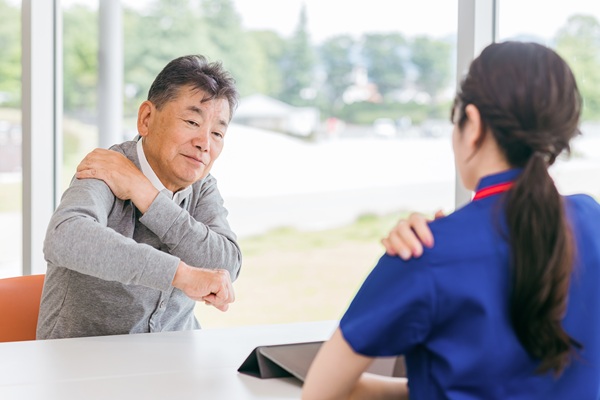
Rotator cuff rehab can help individuals reclaim shoulder and arm mobility. The shoulder joint is a ball-and-socket joint that relies on a small group of muscles to keep it centered. When those muscles are weak or irritated, simple things such as reaching into a cupboard or sleeping on your side can feel nearly impossible. Whether you are dealing with a recent injury or a chronic issue, a physical therapist can design a rotator cuff rehab plan with specific exercises and stretches meant to restore your strength and mobility.
Understanding shoulder mechanics
Think of the rotator cuff as a steering team. It is made up of four specific muscles:
- Supraspinatus
- Infraspinatus
- Teres minor
- Subscapularis.
Together, these muscles' main job is to keep the head of the arm bone tucked tightly into the shallow socket of the shoulder blade. Most pain develops when this system gets overloaded or when the shoulder blade does not move correctly to support the arm. Rotator cuff rehab focuses on restoring this coordination so the joint moves smoothly again.
Exercises and stretches used in rotator cuff rehab
A physical therapist (PT) develops a rotator cuff rehab program in stages. Typically, they start by calming the irritation, then move into the activation stage to wake up the muscles through targeted movements and conditioning. These rehab plans involve regular physical therapy appointments.
During each appointment, the PT will teach the patient the next set of exercises and stretches. The patient will also need to do these at home in between appointments to progress through their recovery. Take a closer look at common exercises and stretches used in rotator cuff rehab.
Beginner strengthening exercises
A PT usually starts with low-load exercises. These movements do not look like much, but they are often effective at teaching the rotator cuff to stay engaged. A scapular squeeze is one of many exercises that a PT can demonstrate during an appointment. As the shoulder gets more comfortable, they will gradually add resistance with bands or small weights. It is important to remember that rotator cuff rehab is about consistency, not overloading. If a patient tries to rush the process with aggressive weights too early, the tendons flare up, setting progress back by weeks.
Mobility drills and stretches
Sometimes, the shoulder feels stuck because the surrounding tissues are tight. If the chest muscles are short or the upper back is stiff, the shoulder has to work twice as hard to move. Mobility work helps clear the path so strengthening exercises can actually do their job.
Common drills include the doorway pec stretch and the sleeper stretch for the back of the shoulder. Many patients also find relief by working on thoracic (upper back) extension. This helps them stand up straight so that the shoulders can reach overhead efficiently.
Advanced exercises for long-term resilience
Once the initial pain is gone, the focus of rotator cuff rehab shifts to functional strength. This might involve overhead presses, carrying heavier objects, or sport-specific drills, depending on the patient's status as an athlete. The end goal is to make the shoulder so resilient that the patient no longer has to think about it.
Talk to a physical therapist
Problems with the rotator cuff can interfere with daily activities and well-being. Fortunately, a physical therapist can help you regain strength and mobility in your shoulder through a personalized treatment plan. Contact us today to schedule an appointment.
Request an appointment here: https://ocptclinic.com or call Orange County Physical Therapy OCPT at (949) 299-0297 for an appointment in our Newport Beach office.
Check out what others are saying about our services on Yelp: Read our Yelp reviews.
Related Posts
Marathon training asks the body to handle thousands of repeated steps, increasing the chance that small aches can turn into bigger setbacks. Searching for sports rehab near me can connect runners with physical therapy that supports recovery, movement quality, and safer training progression. Our physical therapist can assess how the body moves, identify areas that…
A strong ACL rehab plan restores knee stability while protecting healing tissue, so athletes and active patients can move with confidence again. In a physical therapy setting, care follows a criterion-based progression that matches swelling, strength, and movement quality. Timelines vary by surgical technique, individual health, and the surgeon's guidelines, so each plan stays personalized.The…
Physical therapy for athletes can help rebuild strength, improve movement, and lower the risk of reinjury after time away from sports. After all, feeling better does not always mean the body is ready for sprinting, jumping, cutting, lifting, or full-contact play. An injury can leave behind weakness, poor balance, or habits that place too much…
Shockwave therapy is becoming a trusted option for athletes recovering from painful injuries. This non-invasive treatment utilizes targeted sound waves to stimulate healing, alleviate discomfort, and restore mobility. For sprains, tendon problems, or stubborn muscle pain, shockwave therapy can help speed recovery and lower the risk of setbacks, making it a valuable tool in modern…